Preparing Your Pizzeria for Patio Season: Safety and Insurance Tips What Restaurant Owners Should Consider Before Opening Outdoor Seating

1.800.698.1222

As warmer weather arrives across New York, patio dining becomes one of the most exciting opportunities for pizzerias. Outdoor seating can increase capacity, attract new customers, and create a memorable dining experience that keeps guests coming back.

However, expanding your restaurant beyond your indoor space also introduces new operational and insurance considerations. Preparing properly for patio season helps ensure the experience is safe for both guests and staff while protecting your business from unnecessary risks.
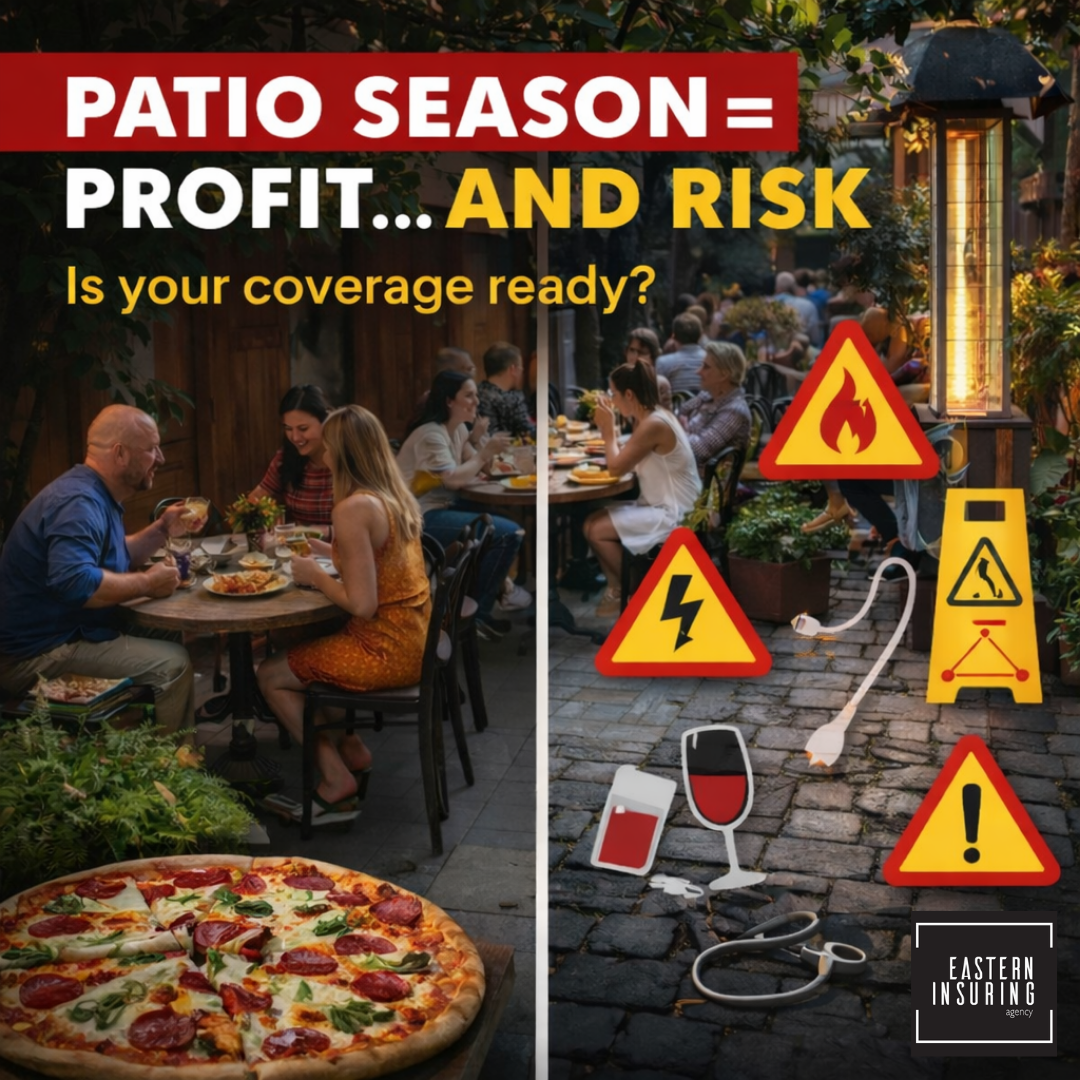
Here are several important factors pizzeria owners should review before opening their outdoor dining areas.

Outdoor Seating Permits and Zoning

Before setting up outdoor tables, chairs, and service areas, it’s important to confirm that your patio space complies with local regulations.

In many municipalities across New York, outdoor dining areas may require:

Local zoning approval
Outdoor seating permits
Updates to liquor licenses if alcohol is served outside
Accessibility compliance
Noise ordinance considerations

Regulations can vary widely by community, and in some cases the requirements may have changed in recent years. Taking time to confirm compliance can help prevent fines, licensing issues, or operational disruptions during your busiest months.

Patio Slip Hazards

Outdoor dining spaces present different slip-and-fall risks than indoor dining areas.

Common patio hazards include:

Uneven pavement or brick surfaces
Rainwater accumulation
Spilled drinks or food
Dirt, leaves, or debris tracked through the space
Wet shoes entering from outdoor areas

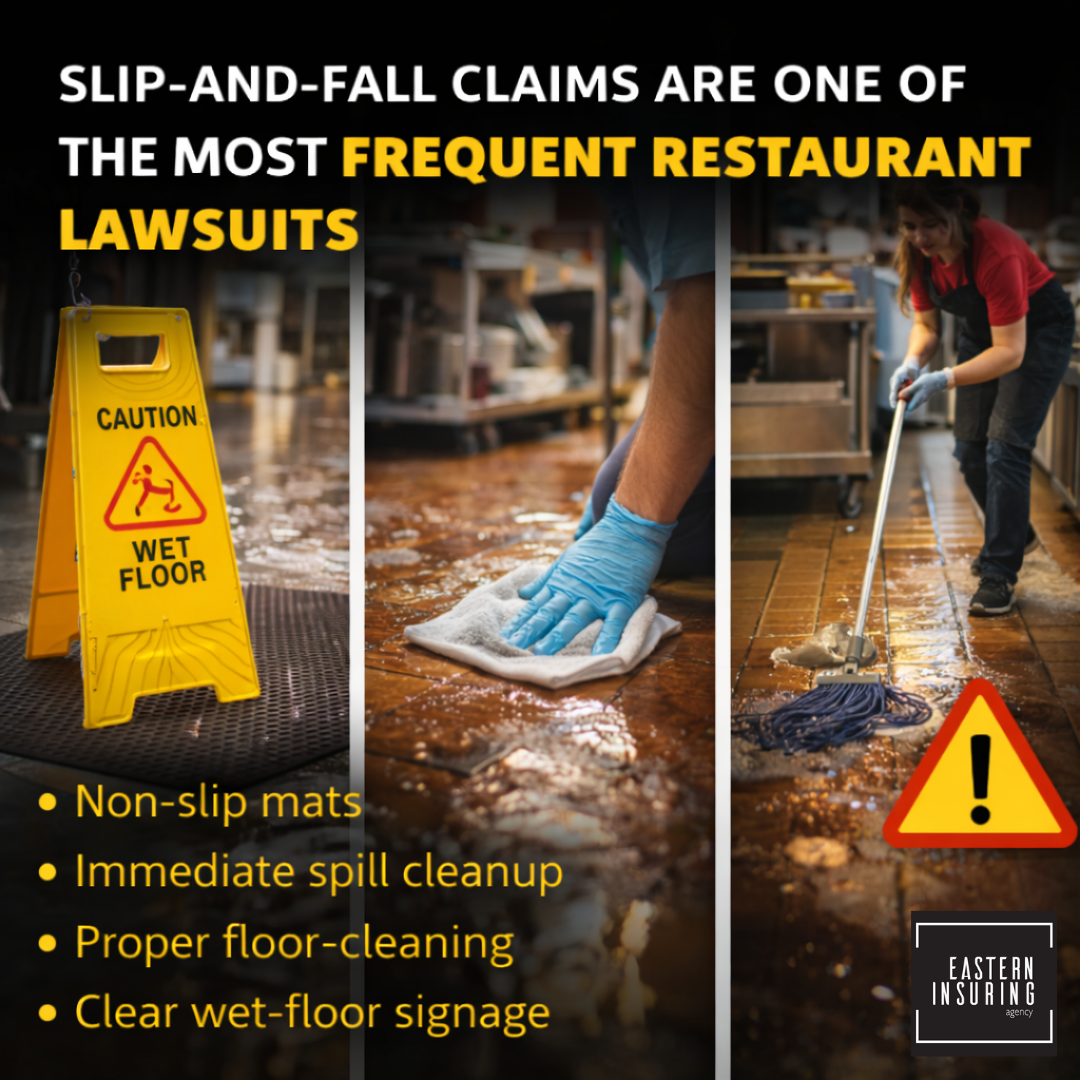
Slip-and-fall accidents are one of the most common liability claims in restaurants. Ensuring proper drainage, maintaining level walking surfaces, and training staff to address spills quickly can help reduce the likelihood of injuries.

In high-traffic areas, slip-resistant flooring or mats may also be helpful.

Lighting and Electrical Safety

Outdoor dining areas often rely on additional lighting, fans, heaters, or decorative features to create an inviting atmosphere.

While these additions enhance the guest experience, they can also introduce safety risks if not properly installed.
Pizzeria owners should regularly inspect:

String lighting and overhead fixtures
Extension cords and electrical connections
Outdoor heaters and power sources
Electrical outlets exposed to weather

Damaged wiring or overloaded circuits can create fire hazards or electrical shock risks. Ensuring outdoor electrical equipment is rated for exterior use and professionally installed can help prevent costly incidents.

Pest and Food Contamination Concerns

Outdoor dining naturally exposes food and serving areas to environmental elements.
Common issues include:
Birds or insects around seating areas
Rodents attracted to food waste
Dust or debris settling on tables
Overhanging trees dropping leaves or debris

These issues can create both food safety concerns and negative guest experiences. Regular cleaning, proper waste management, and pest control services can help maintain a safe and pleasant environment for customers.

Staff training is also important so employees know how to quickly address sanitation concerns when they arise.

Outdoor Liquor Liability

For pizzerias that serve beer, wine, or other alcoholic beverages, outdoor seating areas can also extend liquor liability exposure.

If alcohol is served on the patio, owners should ensure:

The outdoor area is included in the liquor license
Staff follow responsible service practices
Service areas are properly monitored
Local alcohol service regulations are followed

Liquor liability claims can arise if an intoxicated guest causes harm to themselves or others. Proper staff training and careful management of outdoor service areas can help reduce these risks.

Weather-Related Risks

Patio dining depends heavily on weather conditions. Sudden storms, strong winds, or unexpected temperature changes can create hazards.

Outdoor seating areas may face risks such as:

Wind-blown umbrellas or furniture
Wet walking surfaces during rain
Damage to outdoor equipment
Falling branches or debris

Developing clear procedures for securing furniture and temporarily closing outdoor service areas during severe weather helps protect both guests and employees.

Conclusion: Review Your Coverage Before Patio Season Begins

Outdoor dining can be a wonderful addition to any pizzeria, offering guests a unique experience and providing restaurants with valuable additional seating during peak months.

However, expanding operations outdoors also introduces new risks that should be carefully considered. Reviewing safety procedures, operational planning, and insurance coverage before patio season begins can help ensure your business is properly protected.

Working with an insurance advisor who understands restaurant operations can help identify potential coverage gaps and provide peace of mind as you prepare for a successful patio season.

Recent posts
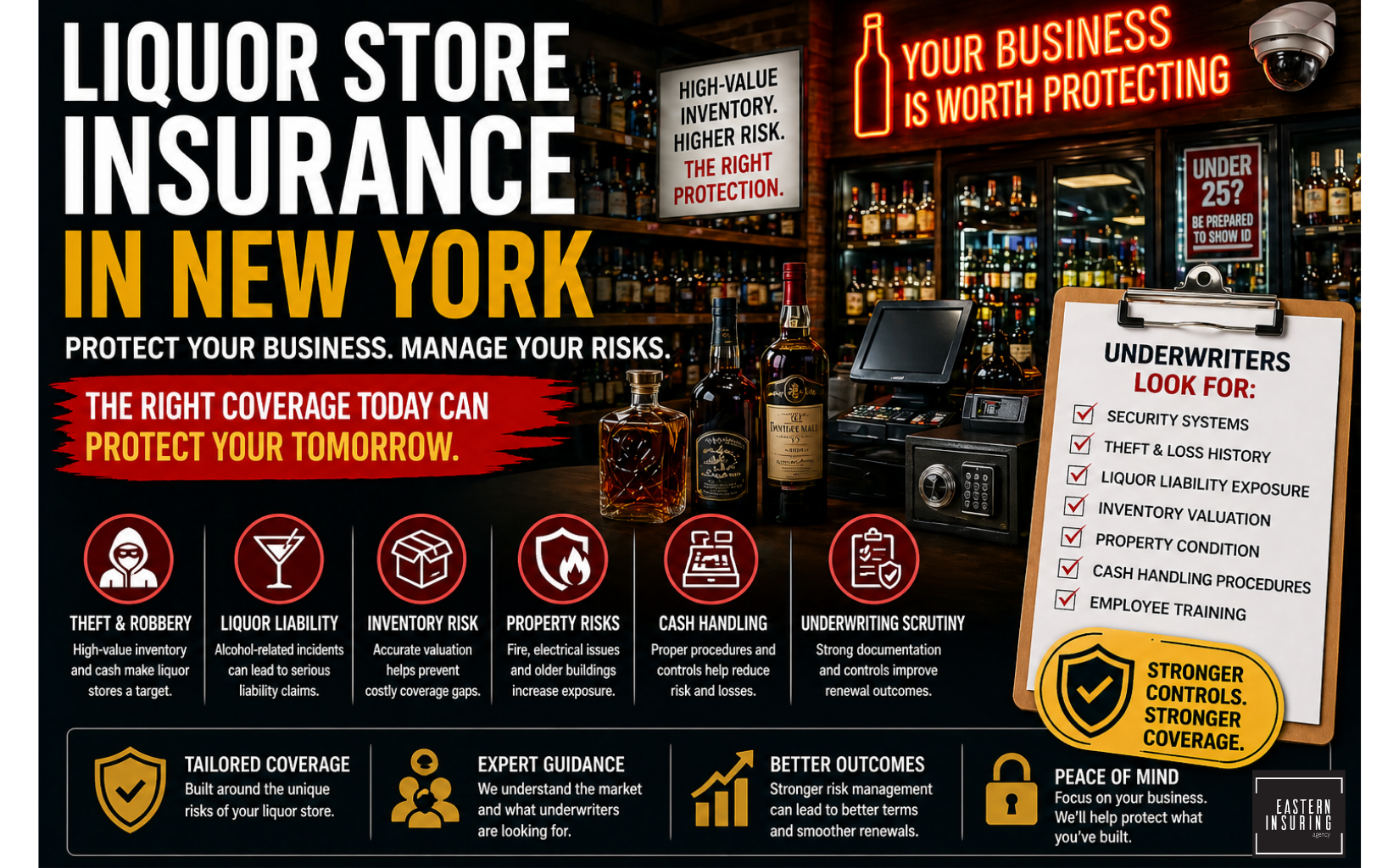
Liquor Store Insurance Coverage Explained for New York Retailers
By David Langlois March 24, 2026
Liquor store insurance in NY requires specialized coverage. Learn how to protect inventory, manage liability risks, and secure the right policy for your business.
The Biggest Insurance Risks Facing Pizzerias in New York
What Every Pizzeria Owner Should Understand
By Penny Hendrie March 18, 2026
Running a pizzeria comes with risks—slips, injuries, equipment breakdown, and delivery exposures. Smart risk management and proper insurance help protect profits.
How Insurance Companies Underwrite Liquor Stores in New York State
By David Langlois March 17, 2026
Learn how insurance companies underwrite liquor stores in New York. Discover key risks, coverage factors, and what impacts your pricing and approval.
The Insurance Every Artisan Contractor Should Carry
By Kylie McAuliffe March 16, 2026
The essential insurance every artisan contractor should carry, including general liability, workers comp, inland marine, commercial auto, and umbrella coverage.
By Kylie McAuliffe March 16, 2026
Many contractors assume their General Liability Insurance policy will cover stolen tools or damaged equipment. Unfortunately, that is not how liability insurance works. Understanding the difference between liability protection and equipment coverage can prevent costly surprises when a loss occurs. Why General Liability Does Not Cover Your Tools General Liability Insurance is designed to protect your business if you cause damage to someone else’s property or if someone is injured because of your work. It is not intended to cover the contractor’s own property. For example, a general liability policy may respond if: • A ladder falls and damages a homeowner’s vehicle • A plumbing installation causes water damage to a customer’s home • Paint overspray damages neighboring property • A customer trips over equipment and is injured In each of these situations, the policy responds because the contractor’s operations caused damage to someone else’s property or bodily injury to another person. However, if a contractor’s own tools are stolen, lost, or damaged, the general liability policy typically does not apply. This is where many contractors discover a gap in their insurance protection. The Unique Risk Contractors Face With Mobile Equipment Unlike many businesses that keep their equipment in a fixed location, contractors constantly move tools and equipment from one jobsite to another. Contractor equipment may be stored in: • Work trucks and vans • Jobsite trailers • Temporary storage containers • Garages or workshops • Active construction sites Because tools are frequently transported and stored in temporary locations, they are more vulnerable to theft, accidental damage, and loss. Construction sites can be particularly attractive targets for thieves, especially overnight when equipment is left unattended. It is not uncommon for contractors to store $10,000 to $50,000 worth of tools and equipment in a truck or trailer at any given time. A single break-in can bring operations to a halt. What Inland Marine Insurance Covers To address this risk, contractors often rely on a specialized policy called Inland Marine Insurance. Despite the unusual name, inland marine coverage has nothing to do with boats. Historically, the term evolved to describe insurance designed to protect property that moves from location to location. For contractors, inland marine insurance protects mobile tools and equipment used in the business. Coverage can typically include: • Power tools and specialty tools • Portable machinery • Diagnostic equipment • Contractor-owned equipment used on jobsites • Tools stored in trucks, trailers, or temporary storage If tools are stolen, damaged in transit, or destroyed in an accident, inland marine insurance can help cover the cost of repair or replacement. This allows contractors to get back to work quickly without absorbing the full financial loss. Why Tool Theft Is So Common in Construction Tool theft is one of the most frequent insurance claims in the construction industry. Several factors contribute to this problem. First, construction sites often contain valuable equipment that can be easily transported and resold. Portable tools, compressors, generators, and specialty equipment can all be attractive targets. Second, many tools are left overnight at job sites or inside vehicles where security may be limited. Finally, many contractors operate small businesses where tools are purchased gradually over time. Owners may not realize just how valuable their collection of tools has become until they calculate the replacement cost. When a theft occurs, replacing every item necessary to complete the work can quickly become expensive. Without the right insurance protection, a contractor may have to replace those tools entirely out of pocket. Protecting Your Tools Is Protecting Your Business For many artisan contractors, tools represent years of investment and experience. They allow the contractor to perform skilled work efficiently and professionally. Losing those tools—even temporarily—can delay projects, frustrate clients, and create unexpected financial strain. By adding Inland Marine Insurance to their insurance program, contractors can ensure their tools and equipment are properly protected wherever they are used. For growing businesses, this coverage is often one of the most practical and valuable forms of insurance available. A Smart Step for Contractors Contractors invest significant time and money building their businesses. Protecting the tools that make that work possible should be part of every contractor’s risk management plan. Understanding what your current insurance does—and does not—cover is the first step. When contractors take the time to review their coverage and address potential gaps, they place themselves in a stronger position to keep their projects running smoothly and their businesses moving forward.
By Kylie McAuliffe February 2, 2026
Over the last few years, many business owners have assumed that higher umbrella limits were simply a matter of cost. In today’s market, that’s no longer true. Umbrella and excess liability carriers are facing unprecedented verdict sizes — not just seven figures, but eight and nine. As a result, insurers are pulling back capacity, increasing attachment points, and placing stricter conditions on how much limit they’re willing to deploy on any single risk. Even well-run organizations are discovering that: Lead umbrella limits are capped Towers require more layers and more carriers Pricing increases don’t always buy additional protection The deciding factor isn’t appetite — it’s confidence. Carriers want confidence in: The quality of the underlying auto and liability programs Risk controls and safety culture Claims management and documentation Industry, jurisdiction, and litigation exposure Umbrella insurance is no longer a standalone purchase. It’s a reflection of how the entire risk program performs. Businesses that invest in strong primary coverage, clear controls, and transparency are the ones still able to build meaningful limits. Willingness to pay matters — but preparedness matters more.
By Penny Hendrie September 22, 2025
Running a pizzeria means juggling hot ovens, sharp knives, heavy dough bags, and slippery floors. That’s a recipe for accidents — and in New York, it’s why pizzerias pay some of the highest Workers’ Compensation premiums in the state. High-Frequency Claims -Pizzerias deal with more than their fair share of injuries: - Burns from ovens and fryers. - Cuts from slicers and knives. - Slips and falls on flour, water, or oil. Each claim impacts your insurance costs — and even small, repeated injuries add up fast. High Turnover, Low Training Pizza shops rely heavily on part-timers and high-turnover staff. Training is rushed (if it happens at all), which means new employees are more likely to get hurt. More injuries = higher claim counts = higher premiums. The EMR Penalty Here’s the part many owners don’t realize: in New York, your Experience Modification Rate (EMR) directly impacts your Workers’ Comp premium. - An EMR of 1.0 is “average.” - An EMR of 1.2 means your premium goes up by about 20%. - An EMR of 0.8 means you’re saving about 20%. And the kicker? Each claim stays on your record for three years. That’s three years of higher premiums for every injury. Real-World Example A Bronx pizzeria had three slip-and-fall claims in two years — nothing major, just sprains and burns. But their EMR climbed from 1.0 to 1.35. Result? Their premium went up by $7,500 a year and they were nearly dropped by their carrier. Penny’s Pizzeria Insurance Pro Tips to Reduce Costs - Train every new hire on burn, cut, and slip prevention. Even a 15-minute safety talk helps. - Invest in non-slip shoes and mats. The cost is tiny compared to one claim. - Rotate lifting tasks so no one employee is carrying heavy flour bags or sauce buckets all day. - Log every incident — even near misses. Insurers like seeing proactive management. - Ask about safety credits. Some carriers offer discounts if you implement training or use loss-control resources. Frequently Asked Questions Can I fight a Workers’ Comp claim if I think it’s unfair? Yes — but you need documentation. Incident logs and witness statements are your best defense. How long does a claim affect my premium? Usually three policy years in New York. That means one injury today can cost you for years. Can training really lower my rates? Absolutely. Fewer claims = lower EMR. Some carriers also reward proactive safety programs with credits. Does Eastern Insuring Agency help with this? Yes — I connect clients with safety resources, training materials, and review claim histories to spot problem areas. Final Slice Workers’ Comp costs aren’t just “the cost of doing business.” With the right training and prevention, you can lower your claims, drop your EMR, and save thousands over time. A safer shop = more dough in your pocket. Schedule a pizza insurance review with me today. I’ll help you cut your Workers’ Comp costs before they cut into your profits.
By Kylie McAuliffe September 17, 2025
The study also shows that long-term, loyal customers with multiple policies are especially impacted. These “high-value” clients—often those who bundle home and auto or carry umbrella coverage—are seeing rate hikes nearly as often as everyone else. Unfortunately, repeated increases can erode trust, causing some homeowners to shop around for alternatives. That’s why transparency and proactive planning are more important than ever. The Numbers at a Glance - Home insurance rates rose 40.4% from 2019–2024. - Average U.S. annual premium: $2,801. - Increases accelerated recently: +5.4% in 2022, +11% in 2023, and +11.4% in 2024. - States like Colorado, Nebraska, Utah, Montana, and Minnesota are seeing the steepest hikes—but New York homeowners are not immune. What You Can Do as a Homeowner Even though rates are rising, there are ways to protect both your home and your wallet: 1. Bundle Policies: Combine home, auto, and umbrella insurance to maximize discounts. 2. Update Home Safety Features: Install security systems, water leak sensors, and fire alarms—these can lower your risk profile. 3. Raise Your Deductible (if practical): A higher deductible can reduce your annual premium. 4. Review Coverage Annually: Make sure you’re not over- or under-insured. For example, updated appraisals or home renovations may affect replacement costs. 5. Ask About Discounts: Loyalty, claims-free, and smart-home discounts are available with many carriers. How We Help at Eastern Insuring Agency As an independent insurance agency, we’re not tied to just one company. That means: - We shop multiple insurers on your behalf. - We explain changes clearly, so you know exactly why your premium shifted. - We offer options—from adjusting deductibles to exploring different carriers—so you can make the choice that best fits your budget and lifestyle. - We look at the long game, helping you balance protection and affordability in 2025 and beyond. The Bottom Line Rising premiums are a national trend, but that doesn’t mean you’re powerless. With the right guidance, you can keep your coverage strong while managing costs. 💬 If you’ve received a renewal notice or want a fresh look at your policy, contact Eastern Insuring Agency today. We’ll walk you through your options, explain the changes, and make sure you’re protected for whatever 2026 may bring.
By Penny Hendrie September 15, 2025
Yep — the grease from your ovens, fryers, and grills builds up in your hoods, vents, and ducts faster than you think. And in New York, it’s one of the leading causes of restaurant fires. The Fire Hazard You Don’t See Even if your kitchen looks spotless, your ductwork may be hiding a thick layer of grease and flour dust. It only takes one spark — from an oven, a fryer, or faulty wiring — to ignite it. Fires spread quickly through ducts, often reaching the roof. Suppression systems can’t do their job if ducts aren’t maintained. One fire can shut down your business for months — or for good. What New York Requires The FDNY and local fire inspectors are strict on hood and duct maintenance. Here’s what they expect: Professional cleaning every 3 months (or more frequently for heavy-use kitchens). Inspection logs available on site for inspectors. Documented contracts with licensed cleaning vendors. 👉 Translation: “We thought we cleaned it ourselves” isn’t going to cut it. DIY vs. Professional Cleaning: What’s the Difference? I hear it all the time: “My guys can clean it better than anyone I hire.” Here’s the problem: Staff cleaning: They can wipe down filters, hoods, and visible grease. Professional cleaning: Licensed contractors use high-powered equipment and degreasers to clean inside ducts and exhaust systems — the hidden areas where fires actually start. Inspectors (and your insurance company) don’t accept “we did it ourselves.” They want to see proof from a licensed vendor. Real-World Example One Brooklyn pizzeria thought they were covered. The staff wiped down the hoods every night, and everything looked clean. But grease inside the ducts ignited, spreading fire to the roof. Their insurance company denied the claim — no professional contract, no cleaning logs. The owner was left with over $300,000 in damages and a business closed for nearly a year. What Does It Cost? Most pizzerias can set up a professional hood & duct cleaning contract for around $1,000–$2,000 a year depending on size and frequency. That’s less than one month’s rent in most of New York… and a fraction of the cost of one fire claim, one fine, or one forced closure. Why a Maintenance Contract Matters Proof of compliance: Shows inspectors and insurers you’re doing it right. No forgetting: Automatic scheduling keeps you compliant year-round. Claim protection: If a fire does happen, you can prove you met your obligations. Insurance renewals: Many carriers look for contracts when deciding whether to renew food-service policies. Penny’s Pizzeria Insurance Pro Tip Bundle your hood and duct cleaning with fire suppression system maintenance. They work together, and often the same vendor can service both. Always keep logs handy — they’re worth their weight in mozzarella when inspectors or adjusters come calling. Frequently Asked Questions Can my employees just clean the hoods themselves? They can handle surface wipe-downs, but duct cleaning must be done by a licensed pro to meet code and insurance requirements. What if my pizza shop doesn’t fry food, just ovens? You still have exposure — ovens release oils, cheese vapor, and flour dust that stick to ducts. Will insurance cover fire damage if I don’t have a contract? Maybe. But carriers can reduce or deny claims if they find you weren’t compliant with fire safety standards. Final Slice You focus on perfecting your pies — let the professionals handle your ducts. The cost of a contract is small. The cost of skipping it? Potentially your entire business. Protect your ovens, your shop, and your people: get a hood and duct maintenance contract and keep your insurance strong. Schedule a pizza insurance review with me today. I’ll walk through your fire risks while you walk me through your best slice.
Pizza delivery insurance
By Penny Hendrie September 8, 2025
Pizzeria Owners learn about Delivery Dilemmas: Employees vs. Third-Party Services — What Every Pizzeria Owner Needs to Know
More Posts