The Insurance Risks Residential Remodelers Face

1.800.698.1222

Residential remodeling is one of the fastest-growing segments in the construction industry. Homeowners are investing heavily in renovations, additions, and upgrades to improve their homes rather than move. For skilled trades like carpenters, electricians, plumbers, tile installers, flooring specialists, and general remodelers, this demand creates tremendous opportunity.

However, remodeling projects also present unique risks that many contractors underestimate.
Unlike new construction, where projects begin with an empty site and controlled conditions, remodeling involves working inside existing homes, often around the homeowner’s belongings, structural components, and older building systems. These conditions increase the chances of unexpected problems occurring during the course of a project.
Because of these exposures, residential remodelers need insurance coverage that is specifically designed to protect them from the types of claims that occur during renovation work.

Working Inside Existing Structures Increases Risk
When contractors work on new construction projects, they are typically dealing with new materials, open spaces, and predictable building conditions. Residential remodeling, however, often requires working around existing plumbing, electrical systems, structural supports, and aging building materials.

This creates the potential for accidental damage during construction.

For example, contractors may encounter:
• Hidden plumbing lines behind walls
• Outdated wiring systems
• Structural components that were not originally documented
• Moisture damage or rot that weakens building materials

A simple mistake during demolition or installation can quickly lead to significant property damage.

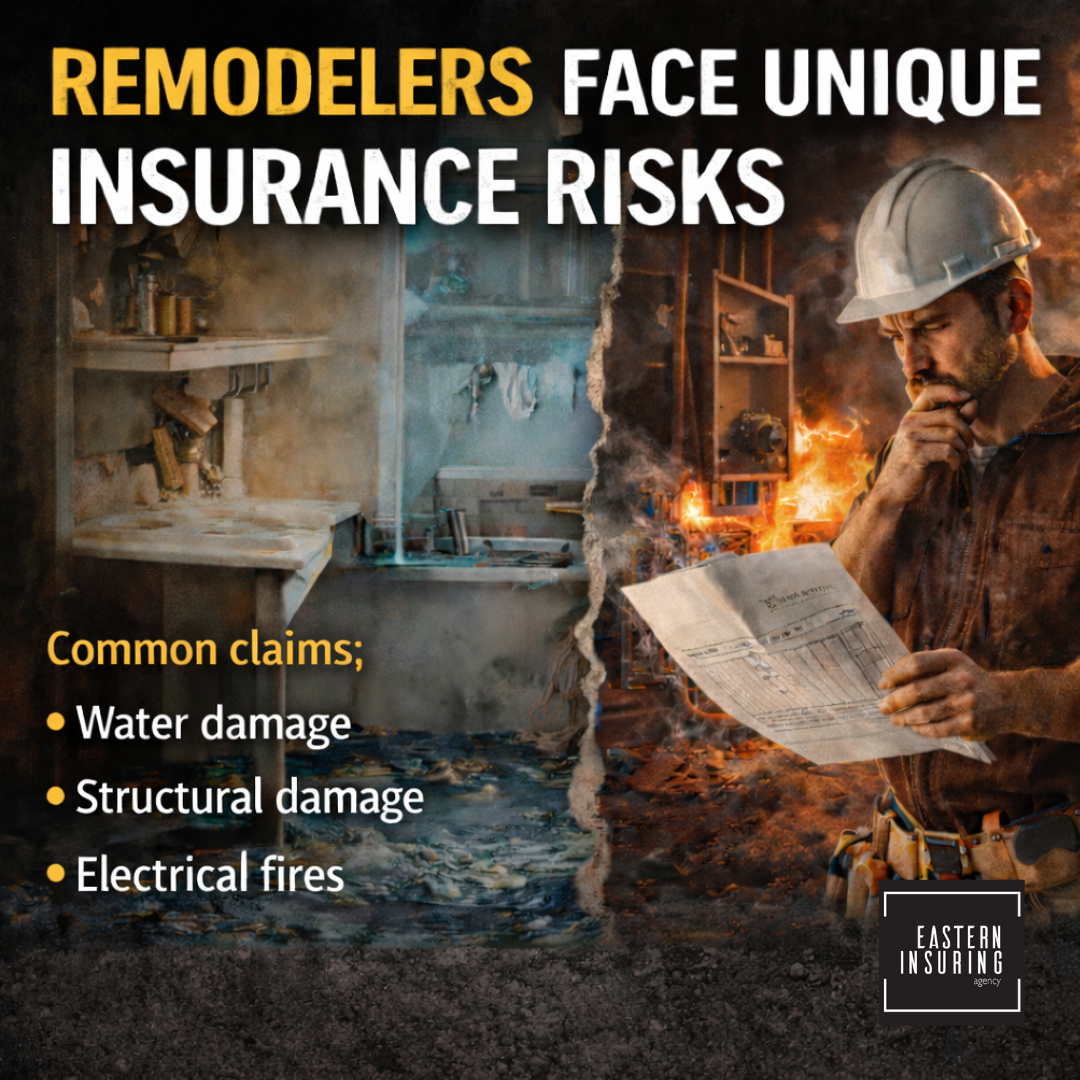
Water Damage Claims Are Common in Remodeling
One of the most frequent claims involving remodelers involves water damage.

Plumbers, tile contractors, flooring installers, and general remodelers frequently work around water systems during kitchen and bathroom renovations. A damaged pipe, improper connection, or failed seal can lead to significant water damage within a home.

Water damage claims can include:
• Damaged flooring or cabinetry
• Mold growth caused by hidden leaks
• Damage to finished living spaces
• Repair costs for multiple areas of the home

Because remodelers are often working inside finished homes, water damage can affect expensive materials and personal property belonging to the homeowner.

General liability insurance can help protect contractors from the financial impact of these types of claims.

Fire Hazards During Renovation Projects
Electrical work, welding, cutting, and the use of heat-producing tools can also introduce fire risk during renovation projects.

For example, electrical contractors upgrading wiring systems or installing new service panels may encounter older wiring conditions that increase fire risk. Similarly, contractors performing demolition work may unknowingly expose combustible materials.

Even a small fire can cause major damage to a home and lead to costly repairs.

When incidents like these occur, contractors may face liability claims for property damage, legal expenses, and project delays.

Damage to Client Property
Another challenge remodelers face is the presence of homeowner property during construction.

Unlike new construction, residential remodeling often takes place in homes that are still occupied or filled with valuable personal belongings. Furniture, electronics, flooring, cabinetry, and decorative finishes may all be exposed to damage during the renovation process.

Common claims can involve:
• Dust or debris damaging personal belongings
• Tools accidentally scratching or damaging finished surfaces
• Construction materials damaging floors or walls
• Equipment causing accidental damage during installation

Because remodelers are working in close proximity to finished interiors, even careful contractors can encounter situations where damage occurs.

Why Remodelers Should Consider Builders Risk Insurance
Another important coverage many remodelers overlook is Builders Risk Insurance.

Builders risk policies help protect construction materials and project-related property during the course of a renovation. This coverage can be particularly valuable when contractors are responsible for materials, fixtures, or structural improvements before the project is completed.

Builders risk insurance can protect against losses caused by:
Fire
• Theft of building materials
• Weather damage
• Vandalism

For remodelers working on higher-value homes or large renovation projects, builders risk coverage can help ensure that a project can recover from unexpected setbacks.

Protecting Your Crew With Workers Compensation
Residential remodeling projects often require contractors and employees to work in tight spaces, on ladders, or in partially demolished areas.

These conditions increase the risk of workplace injuries such as:
 Falls from ladders or scaffolding
• Cuts or injuries from tools
• Strains caused by lifting materials
• Exposure to hazardous materials in older homes

Workers compensation insurance helps cover medical expenses and lost wages if an employee is injured on the job. For many contractors, it is also required by law once employees are hired.

Having proper coverage ensures both employees and the business are protected.

Insurance Is Part of Professional Remodeling
As remodeling projects become larger and more complex, homeowners and general contractors increasingly expect professional remodelers to maintain appropriate insurance coverage.

In many cases, contractors must provide:
Certificates of insurance
• Proof of general liability coverage
• Workers compensation documentation

Contractors who maintain the proper insurance program demonstrate professionalism and reliability to clients and partners.

More importantly, they protect the business they have worked hard to build.

Building a Strong Insurance Foundation
Residential remodeling is a rewarding and growing field within the construction industry, but it comes with risks that contractors must be prepared to manage.

By combining coverage such as General Liability, Builders Risk, Workers Compensation, and Commercial Auto Insurance, remodelers can create a strong insurance foundation that protects their operations and allows them to focus on delivering quality work.

For contractors who understand the value of preparation and planning, the right insurance program is not just a safety net—it is an essential tool for long-term success.

Recent posts
Delivery, Online Ordering, and the Changing Risk Landscape for Pizzerias
What Restaurant Owners Shou
By Penny Hendrie April 7, 2026
Online ordering boosts pizzeria sales but adds risks—delivery, liability, and cyber threats. Smart planning and insurance keep your business protected.
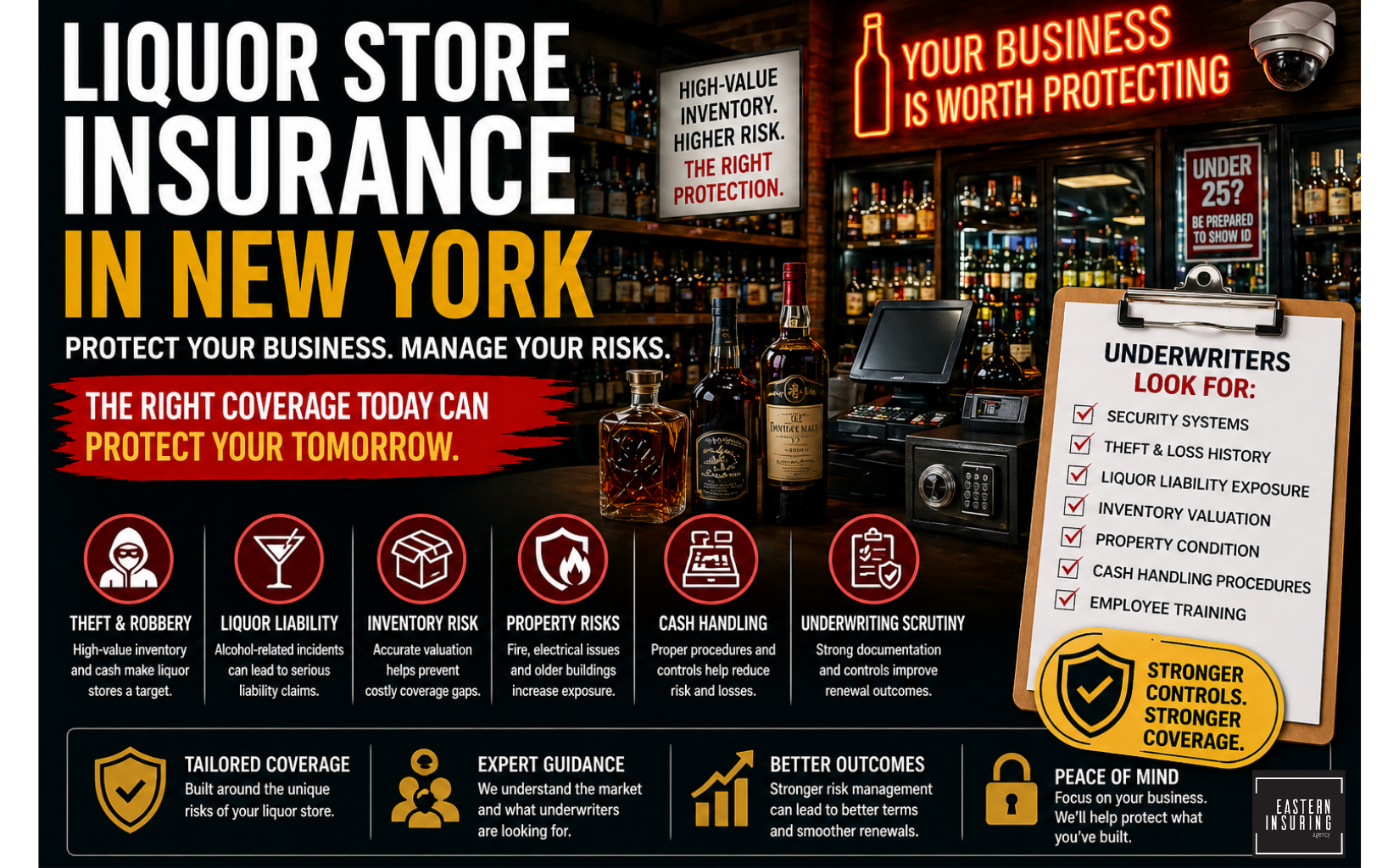
The Biggest Insurance Risks Liquor Stores Face in New York State
By David Langlois April 7, 2026
Liquor stores in NY face theft, liability, and property risks. Learn the most common exposures and how insurance carriers evaluate your business.
Preparing Your Pizzeria for Patio Season: Safety and Insurance Tips
What Restaurant Owners Should Co
By Penny Hendrie March 24, 2026
Patio season boosts pizzeria sales—but adds risks. From slips to weather, smart planning and insurance help keep outdoor dining safe and profitable.
Liquor Store Insurance Coverage Explained for New York Retailers
By David Langlois March 24, 2026
Liquor store insurance in NY requires specialized coverage. Learn how to protect inventory, manage liability risks, and secure the right policy for your business.
The Biggest Insurance Risks Facing Pizzerias in New York
What Every Pizzeria Owner Should Understand
By Penny Hendrie March 18, 2026
Running a pizzeria comes with risks—slips, injuries, equipment breakdown, and delivery exposures. Smart risk management and proper insurance help protect profits.
How Insurance Companies Underwrite Liquor Stores in New York State
By David Langlois March 17, 2026
Learn how insurance companies underwrite liquor stores in New York. Discover key risks, coverage factors, and what impacts your pricing and approval.
The Insurance Every Artisan Contractor Should Carry
By Kylie McAuliffe March 16, 2026
The essential insurance every artisan contractor should carry, including general liability, workers comp, inland marine, commercial auto, and umbrella coverage.
By Kylie McAuliffe March 16, 2026
Many contractors assume their General Liability Insurance policy will cover stolen tools or damaged equipment. Unfortunately, that is not how liability insurance works. Understanding the difference between liability protection and equipment coverage can prevent costly surprises when a loss occurs. Why General Liability Does Not Cover Your Tools General Liability Insurance is designed to protect your business if you cause damage to someone else’s property or if someone is injured because of your work. It is not intended to cover the contractor’s own property. For example, a general liability policy may respond if: • A ladder falls and damages a homeowner’s vehicle • A plumbing installation causes water damage to a customer’s home • Paint overspray damages neighboring property • A customer trips over equipment and is injured In each of these situations, the policy responds because the contractor’s operations caused damage to someone else’s property or bodily injury to another person. However, if a contractor’s own tools are stolen, lost, or damaged, the general liability policy typically does not apply. This is where many contractors discover a gap in their insurance protection. The Unique Risk Contractors Face With Mobile Equipment Unlike many businesses that keep their equipment in a fixed location, contractors constantly move tools and equipment from one jobsite to another. Contractor equipment may be stored in: • Work trucks and vans • Jobsite trailers • Temporary storage containers • Garages or workshops • Active construction sites Because tools are frequently transported and stored in temporary locations, they are more vulnerable to theft, accidental damage, and loss. Construction sites can be particularly attractive targets for thieves, especially overnight when equipment is left unattended. It is not uncommon for contractors to store $10,000 to $50,000 worth of tools and equipment in a truck or trailer at any given time. A single break-in can bring operations to a halt. What Inland Marine Insurance Covers To address this risk, contractors often rely on a specialized policy called Inland Marine Insurance. Despite the unusual name, inland marine coverage has nothing to do with boats. Historically, the term evolved to describe insurance designed to protect property that moves from location to location. For contractors, inland marine insurance protects mobile tools and equipment used in the business. Coverage can typically include: • Power tools and specialty tools • Portable machinery • Diagnostic equipment • Contractor-owned equipment used on jobsites • Tools stored in trucks, trailers, or temporary storage If tools are stolen, damaged in transit, or destroyed in an accident, inland marine insurance can help cover the cost of repair or replacement. This allows contractors to get back to work quickly without absorbing the full financial loss. Why Tool Theft Is So Common in Construction Tool theft is one of the most frequent insurance claims in the construction industry. Several factors contribute to this problem. First, construction sites often contain valuable equipment that can be easily transported and resold. Portable tools, compressors, generators, and specialty equipment can all be attractive targets. Second, many tools are left overnight at job sites or inside vehicles where security may be limited. Finally, many contractors operate small businesses where tools are purchased gradually over time. Owners may not realize just how valuable their collection of tools has become until they calculate the replacement cost. When a theft occurs, replacing every item necessary to complete the work can quickly become expensive. Without the right insurance protection, a contractor may have to replace those tools entirely out of pocket. Protecting Your Tools Is Protecting Your Business For many artisan contractors, tools represent years of investment and experience. They allow the contractor to perform skilled work efficiently and professionally. Losing those tools—even temporarily—can delay projects, frustrate clients, and create unexpected financial strain. By adding Inland Marine Insurance to their insurance program, contractors can ensure their tools and equipment are properly protected wherever they are used. For growing businesses, this coverage is often one of the most practical and valuable forms of insurance available. A Smart Step for Contractors Contractors invest significant time and money building their businesses. Protecting the tools that make that work possible should be part of every contractor’s risk management plan. Understanding what your current insurance does—and does not—cover is the first step. When contractors take the time to review their coverage and address potential gaps, they place themselves in a stronger position to keep their projects running smoothly and their businesses moving forward.
By Kylie McAuliffe February 2, 2026
Over the last few years, many business owners have assumed that higher umbrella limits were simply a matter of cost. In today’s market, that’s no longer true. Umbrella and excess liability carriers are facing unprecedented verdict sizes — not just seven figures, but eight and nine. As a result, insurers are pulling back capacity, increasing attachment points, and placing stricter conditions on how much limit they’re willing to deploy on any single risk. Even well-run organizations are discovering that: Lead umbrella limits are capped Towers require more layers and more carriers Pricing increases don’t always buy additional protection The deciding factor isn’t appetite — it’s confidence. Carriers want confidence in: The quality of the underlying auto and liability programs Risk controls and safety culture Claims management and documentation Industry, jurisdiction, and litigation exposure Umbrella insurance is no longer a standalone purchase. It’s a reflection of how the entire risk program performs. Businesses that invest in strong primary coverage, clear controls, and transparency are the ones still able to build meaningful limits. Willingness to pay matters — but preparedness matters more.
By Penny Hendrie September 22, 2025
Running a pizzeria means juggling hot ovens, sharp knives, heavy dough bags, and slippery floors. That’s a recipe for accidents — and in New York, it’s why pizzerias pay some of the highest Workers’ Compensation premiums in the state. High-Frequency Claims -Pizzerias deal with more than their fair share of injuries: - Burns from ovens and fryers. - Cuts from slicers and knives. - Slips and falls on flour, water, or oil. Each claim impacts your insurance costs — and even small, repeated injuries add up fast. High Turnover, Low Training Pizza shops rely heavily on part-timers and high-turnover staff. Training is rushed (if it happens at all), which means new employees are more likely to get hurt. More injuries = higher claim counts = higher premiums. The EMR Penalty Here’s the part many owners don’t realize: in New York, your Experience Modification Rate (EMR) directly impacts your Workers’ Comp premium. - An EMR of 1.0 is “average.” - An EMR of 1.2 means your premium goes up by about 20%. - An EMR of 0.8 means you’re saving about 20%. And the kicker? Each claim stays on your record for three years. That’s three years of higher premiums for every injury. Real-World Example A Bronx pizzeria had three slip-and-fall claims in two years — nothing major, just sprains and burns. But their EMR climbed from 1.0 to 1.35. Result? Their premium went up by $7,500 a year and they were nearly dropped by their carrier. Penny’s Pizzeria Insurance Pro Tips to Reduce Costs - Train every new hire on burn, cut, and slip prevention. Even a 15-minute safety talk helps. - Invest in non-slip shoes and mats. The cost is tiny compared to one claim. - Rotate lifting tasks so no one employee is carrying heavy flour bags or sauce buckets all day. - Log every incident — even near misses. Insurers like seeing proactive management. - Ask about safety credits. Some carriers offer discounts if you implement training or use loss-control resources. Frequently Asked Questions Can I fight a Workers’ Comp claim if I think it’s unfair? Yes — but you need documentation. Incident logs and witness statements are your best defense. How long does a claim affect my premium? Usually three policy years in New York. That means one injury today can cost you for years. Can training really lower my rates? Absolutely. Fewer claims = lower EMR. Some carriers also reward proactive safety programs with credits. Does Eastern Insuring Agency help with this? Yes — I connect clients with safety resources, training materials, and review claim histories to spot problem areas. Final Slice Workers’ Comp costs aren’t just “the cost of doing business.” With the right training and prevention, you can lower your claims, drop your EMR, and save thousands over time. A safer shop = more dough in your pocket. Schedule a pizza insurance review with me today. I’ll help you cut your Workers’ Comp costs before they cut into your profits.
More Posts