Securing Your Legacy: The Crucial Reasons to Invest in Life Insurance

1.800.698.1222

Key Reasons for Life Insurance Investment

Securing Your Legacy: The Crucial Reasons to Invest in Life Insurance


In the hustle and bustle of daily life, it's easy to overlook the importance of planning for the unexpected. One essential aspect that often gets sidelined is securing your family's future through life insurance. If you're among those who haven't considered life insurance, here are compelling reasons why you should:


1. Financial Security for Your Loved Ones:

  • Life insurance provides a financial safety net for your family in the event of your untimely demise. It ensures that your loved ones can maintain their standard of living, cover daily expenses, and achieve future financial goals, such as education and homeownership.


2. Debt Repayment:

  • Outstanding debts can be a significant burden on surviving family members. Life insurance can help settle mortgages, loans, or any other debts, preventing your loved ones from inheriting financial liabilities along with their grief.


3. Funeral and Final Expenses:

  • Funerals and associated expenses can be unexpectedly high. Life insurance helps cover these costs, relieving your family from the financial strain during a challenging time.


4. Income Replacement:

  • If you are a primary breadwinner, life insurance ensures that your family continues to receive a steady income after your passing. This can be crucial for maintaining their quality of life and meeting ongoing financial obligations.


5. Planning for Your Child's Future:

  • Life insurance can be a powerful tool for securing your child's future education. The death benefit can be earmarked for educational expenses, offering them the opportunity to pursue their dreams


6. Peace of Mind:

  • Knowing that your loved ones are financially protected brings a sense of peace and security. Life insurance provides reassurance that your family can navigate the future with a measure of financial stability, even in your absence.


7. Estate Planning:

  • Life insurance can be a valuable component of estate planning. It ensures that your beneficiaries receive the intended financial support without the complications of probate, streamlining the transfer of assets.


8. Affordable Options for Every Life Stage:

  • Contrary to common misconceptions, life insurance is not only for the elderly. There are affordable options for every life stage, making it accessible and manageable for individuals of all ages to secure coverage.


9. Long-Term Financial Planning:

  • Life insurance is not just about immediate needs; it's a vital component of long-term financial planning. It provides a foundation for building a secure financial future for your family.


10. Tax Benefits:

  • Life insurance often comes with tax advantages. The death benefit is typically tax-free, providing your beneficiaries with a lump sum without the burden of taxation.


In conclusion, life insurance is an investment in your family's future. It's a tangible expression of love and responsibility, ensuring that your loved ones are protected financially when they need it most. Don't delay—consult with a financial advisor to explore the life insurance options that best suit your needs and secure the legacy you want to leave behind.

Top of Form


Message from Eastern Insuring Agency:

Navigating the intricacies of insurance coverage requires a personalized approach, taking into account your unique circumstances, preferences, and financial goals. To gain a comprehensive understanding of the information provided in this blog and its direct relevance to your specific insurance needs, we encourage you to reach out to your dedicated agent at Eastern Insuring Agency at 1.800.698.1222.


Our team is here to guide you through the decision-making process, answer any questions you may have, and ensure that you have the right coverage in place for your peace of mind. Your agent at Eastern Insuring Agency is committed to providing the expertise and support you need to make informed choices and safeguard what matters most to you.


Recent posts
Delivery, Online Ordering, and the Changing Risk Landscape for Pizzerias
What Restaurant Owners Shou
By Penny Hendrie April 7, 2026
Online ordering boosts pizzeria sales but adds risks—delivery, liability, and cyber threats. Smart planning and insurance keep your business protected.
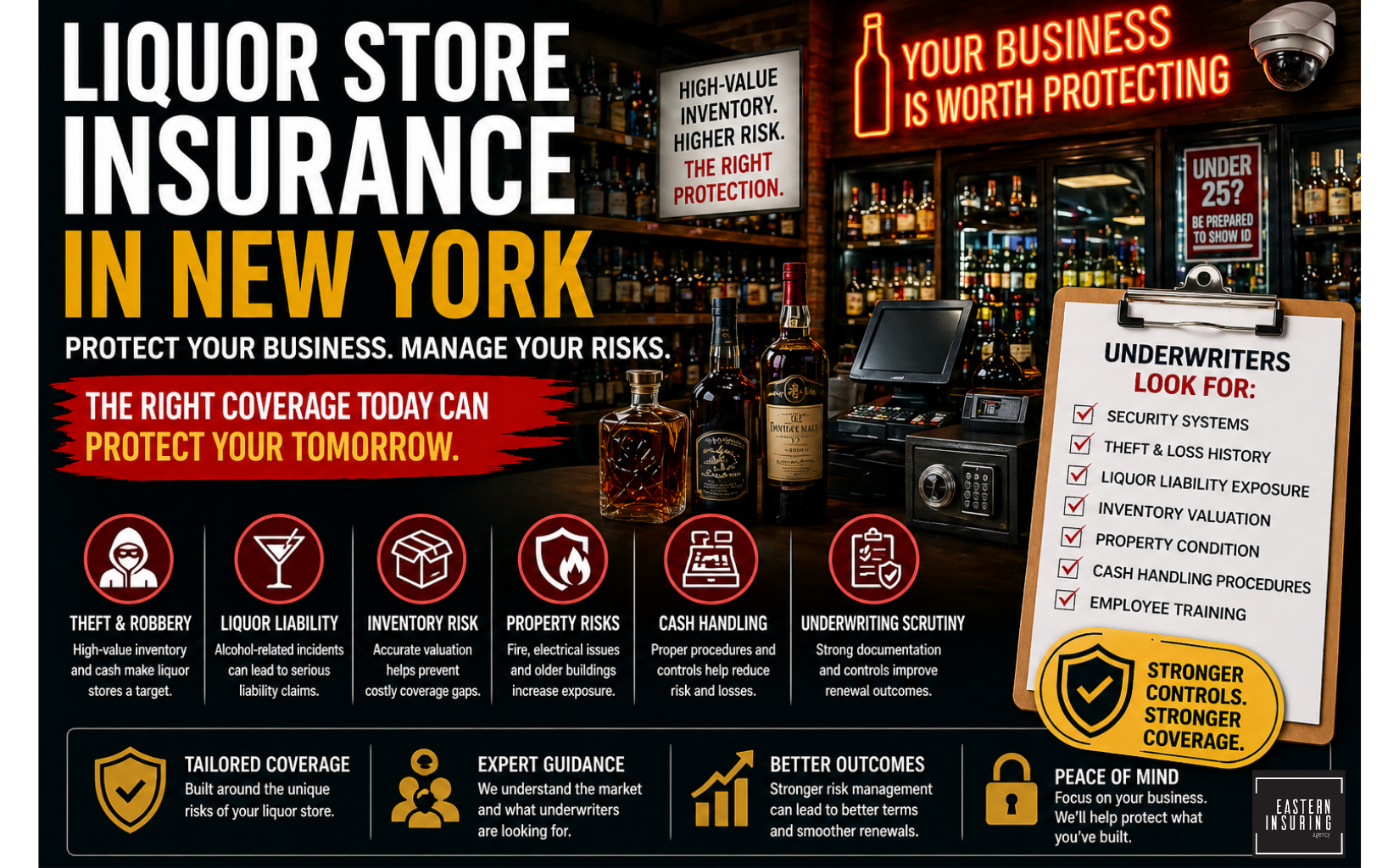
The Biggest Insurance Risks Liquor Stores Face in New York State
By David Langlois April 7, 2026
Liquor stores in NY face theft, liability, and property risks. Learn the most common exposures and how insurance carriers evaluate your business.
Remodelers Face Unique Insurance Risks
By Kylie McAuliffe April 7, 2026
Residential remodelers face hidden risks—water damage, fire, and property loss. Learn how the right insurance protects your projects, crew, and reputation.
Preparing Your Pizzeria for Patio Season: Safety and Insurance Tips
What Restaurant Owners Should Co
By Penny Hendrie March 24, 2026
Patio season boosts pizzeria sales—but adds risks. From slips to weather, smart planning and insurance help keep outdoor dining safe and profitable.
Liquor Store Insurance Coverage Explained for New York Retailers
By David Langlois March 24, 2026
Liquor store insurance in NY requires specialized coverage. Learn how to protect inventory, manage liability risks, and secure the right policy for your business.
The Biggest Insurance Risks Facing Pizzerias in New York
What Every Pizzeria Owner Should Understand
By Penny Hendrie March 18, 2026
Running a pizzeria comes with risks—slips, injuries, equipment breakdown, and delivery exposures. Smart risk management and proper insurance help protect profits.
How Insurance Companies Underwrite Liquor Stores in New York State
By David Langlois March 17, 2026
Learn how insurance companies underwrite liquor stores in New York. Discover key risks, coverage factors, and what impacts your pricing and approval.
The Insurance Every Artisan Contractor Should Carry
By Kylie McAuliffe March 16, 2026
The essential insurance every artisan contractor should carry, including general liability, workers comp, inland marine, commercial auto, and umbrella coverage.
By Kylie McAuliffe March 16, 2026
Many contractors assume their General Liability Insurance policy will cover stolen tools or damaged equipment. Unfortunately, that is not how liability insurance works. Understanding the difference between liability protection and equipment coverage can prevent costly surprises when a loss occurs. Why General Liability Does Not Cover Your Tools General Liability Insurance is designed to protect your business if you cause damage to someone else’s property or if someone is injured because of your work. It is not intended to cover the contractor’s own property. For example, a general liability policy may respond if: • A ladder falls and damages a homeowner’s vehicle • A plumbing installation causes water damage to a customer’s home • Paint overspray damages neighboring property • A customer trips over equipment and is injured In each of these situations, the policy responds because the contractor’s operations caused damage to someone else’s property or bodily injury to another person. However, if a contractor’s own tools are stolen, lost, or damaged, the general liability policy typically does not apply. This is where many contractors discover a gap in their insurance protection. The Unique Risk Contractors Face With Mobile Equipment Unlike many businesses that keep their equipment in a fixed location, contractors constantly move tools and equipment from one jobsite to another. Contractor equipment may be stored in: • Work trucks and vans • Jobsite trailers • Temporary storage containers • Garages or workshops • Active construction sites Because tools are frequently transported and stored in temporary locations, they are more vulnerable to theft, accidental damage, and loss. Construction sites can be particularly attractive targets for thieves, especially overnight when equipment is left unattended. It is not uncommon for contractors to store $10,000 to $50,000 worth of tools and equipment in a truck or trailer at any given time. A single break-in can bring operations to a halt. What Inland Marine Insurance Covers To address this risk, contractors often rely on a specialized policy called Inland Marine Insurance. Despite the unusual name, inland marine coverage has nothing to do with boats. Historically, the term evolved to describe insurance designed to protect property that moves from location to location. For contractors, inland marine insurance protects mobile tools and equipment used in the business. Coverage can typically include: • Power tools and specialty tools • Portable machinery • Diagnostic equipment • Contractor-owned equipment used on jobsites • Tools stored in trucks, trailers, or temporary storage If tools are stolen, damaged in transit, or destroyed in an accident, inland marine insurance can help cover the cost of repair or replacement. This allows contractors to get back to work quickly without absorbing the full financial loss. Why Tool Theft Is So Common in Construction Tool theft is one of the most frequent insurance claims in the construction industry. Several factors contribute to this problem. First, construction sites often contain valuable equipment that can be easily transported and resold. Portable tools, compressors, generators, and specialty equipment can all be attractive targets. Second, many tools are left overnight at job sites or inside vehicles where security may be limited. Finally, many contractors operate small businesses where tools are purchased gradually over time. Owners may not realize just how valuable their collection of tools has become until they calculate the replacement cost. When a theft occurs, replacing every item necessary to complete the work can quickly become expensive. Without the right insurance protection, a contractor may have to replace those tools entirely out of pocket. Protecting Your Tools Is Protecting Your Business For many artisan contractors, tools represent years of investment and experience. They allow the contractor to perform skilled work efficiently and professionally. Losing those tools—even temporarily—can delay projects, frustrate clients, and create unexpected financial strain. By adding Inland Marine Insurance to their insurance program, contractors can ensure their tools and equipment are properly protected wherever they are used. For growing businesses, this coverage is often one of the most practical and valuable forms of insurance available. A Smart Step for Contractors Contractors invest significant time and money building their businesses. Protecting the tools that make that work possible should be part of every contractor’s risk management plan. Understanding what your current insurance does—and does not—cover is the first step. When contractors take the time to review their coverage and address potential gaps, they place themselves in a stronger position to keep their projects running smoothly and their businesses moving forward.
By Kylie McAuliffe February 2, 2026
Over the last few years, many business owners have assumed that higher umbrella limits were simply a matter of cost. In today’s market, that’s no longer true. Umbrella and excess liability carriers are facing unprecedented verdict sizes — not just seven figures, but eight and nine. As a result, insurers are pulling back capacity, increasing attachment points, and placing stricter conditions on how much limit they’re willing to deploy on any single risk. Even well-run organizations are discovering that: Lead umbrella limits are capped Towers require more layers and more carriers Pricing increases don’t always buy additional protection The deciding factor isn’t appetite — it’s confidence. Carriers want confidence in: The quality of the underlying auto and liability programs Risk controls and safety culture Claims management and documentation Industry, jurisdiction, and litigation exposure Umbrella insurance is no longer a standalone purchase. It’s a reflection of how the entire risk program performs. Businesses that invest in strong primary coverage, clear controls, and transparency are the ones still able to build meaningful limits. Willingness to pay matters — but preparedness matters more.
More Posts